5 Exercises For Fall Prevention
Fall Prevention Exercises for Older Adults: Ensuring Stability and Independence
Dan John once remarked, “the most dangerous part of my day is when I step out of the shower.” Consider this: how prone is one to slipping and falling immediately after getting out of the shower? Now, if it's that effortless for an average person, envision the concerns of your older adult clients regarding balance loss.
It is, therefore, the solemn responsibility of personal trainers to ensure that older adult clients, regardless of their other objectives, are capable of standing firmly on their own two feet. The gravity of this responsibility is underscored by the following sobering statistics:
One in five falls results in a severe injury, such as broken bones or head trauma.
Annually, 3 million older individuals are treated in emergency departments for fall - related injuries.
Over 800,000 patients are hospitalized each year due to fall injuries, predominantly due to head injuries or hip fractures.
At least 300,000 older adults are hospitalized for hip fractures annually.
More than 95% of hip fractures are caused by falls, typically from a sideways direction.
Falls are the most prevalent cause of traumatic brain injuries.
In 2015, the total medical costs associated with falls exceeded $50 billion, with Medicare and Medicaid bearing 75% of these expenses.
Moreover, this loss of mobility renders it two - to - three times more likely for the older adult who has fallen to pass away.
However, prior to delving into the exercises that prevent falls, it is essential to define balance and the bodily systems that regulate it.
Balance is “the capacity to maintain the body's center of mass over its base of support.” It encompasses both static (stationary) and dynamic (movement - related) aspects.
The systems that collaborate to maintain balance are as follows:
The Vestibular System: Located in the inner ear, this system furnishes the brain with information regarding the body's motion, equilibrium, and spatial orientation.
The Musculoskeletal System: Skin, muscles, ligaments, and tendons transmit sensory information to the brain, enabling awareness of the body's position in space and responsiveness to environmental changes.
The Neuromuscular System: Information from the eyes, vestibular, and musculoskeletal systems travels via the neuromuscular system to the brain, which then relays information through the central and peripheral nervous systems to respond to environmental alterations.
Admittedly, numerous exercises can enhance your client's posture, balance, and reduce their fall risk, and hopefully, you are incorporating them into their training. However, the criteria for selecting the top 5 exercises for fall prevention are as follows:
Maximum effectiveness relative to effort
Simplicity
No requirement for specialized equipment
Enhancement of the three aforementioned systems
The subsequent 5 exercises will enhance your client's ability to stand upright with confidence.
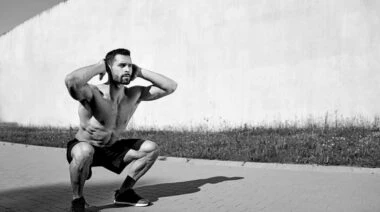
1. Squats
Squats are an integral part of your client's daily routine, from the moment they awaken to when they retire for the night. Throughout the day, they unconsciously perform the squatting motion numerous times. For instance:
Getting in and out of bed
Using the restroom
Picking up objects from the floor
Standing up from and sitting down on a chair
Strong legs are indispensable for your clients to maintain mobility and prevent falls as they age, and squats are instrumental in developing this leg strength. Strengthening the quadriceps, hamstrings, and glutes aids in fall prevention and enables them to lead a fulfilling life as they grow older.
Furthermore, squats fortify the core muscles, facilitating everyday movements such as turning, bending, and standing. Additionally, a robust core can alleviate lower back pain and promote good posture.
It is assumed that you are aware of these benefits, and squats feature prominently in your training programs for older adults.
2. Half And Tall Kneeling Positions
The primary function of the central nervous system is to mitigate the threats of physical harm (whether real or perceived), and being close to the floor reduces the risks sensed by the CNS during balance - improving training.
Moreover, if your client is unable to maintain an upright position on the floor in the tall or half - kneeling positions for an extended period, their prospects of doing so while standing are slim.
Both these positions strengthen the glutes, enhance core stability, and improve hip mobility, all of which are crucial for their overall health and well - being.
Program the tall kneeling and half - kneeling positions for 1 - 2 minutes each. Once they become comfortable, they can perform exercises from these positions to enhance strength, stability, and balance, such as Half/Tall kneeling lat pulldowns, Pallof presses, and Landmine presses.
3. Farmers Carries
Contemplate how frequently your clients (or you) carry objects in their hands each week. Is it 2, 3, 4 times, or daily? Carrying and walking are fundamental human movements, making it logical to include them in your client's training programs.
Moreover, farmer's carries confer the following benefits:
Posture: It is nearly impossible to carry heavy weights with rounded shoulders.
Breathing Patterns: Carrying weights in the hands makes it difficult to breathe shallowly from the chest.
Shoulder Stability: The rotator cuffs work diligently to keep the shoulders in their sockets.
Balance: Each step of the farmer's carry involves a single - leg stance.
Grip Strength: This is essential, especially if one enjoys activities that require a firm grip.
If there are any irregularities in your client's gait, walking with weights will reveal them, allowing for corrective action. From a programming perspective, carries should be incorporated early in the training session, either as part of the warm - up or core training, when your older adult clients have the most energy.
This exercise has significant carry - over from the gym to daily life and is a must - do for every senior.
4. Head Nods
The position of the head influences the movement of the rest of the body, and the inability to control head position affects the body's overall function. This is because the ability to hold the head up directly impacts the operation of the vestibular system.
The vestibular system is the first sensory system to develop in the human body, and all other sensory systems rely on it. This is why infants exert great effort to hold their heads up; without proper head control, walking would be unfeasible.
Therefore, strengthening the neck and ensuring your clients maintain a proper head position ensures that all their balance systems work in harmony to keep them upright. The most effective way to achieve this is by incorporating Head Nods into the training.
Head Nods improve posture and reduce the shearing and compression forces on the neck. Additionally, this lessens the pressure on the cervical nerves as they exit the spinal column, enabling them to function optimally.
This is a straightforward exercise that can be easily incorporated into the warm - up for 10 - 15 repetitions in the prone or six - point position.
5. Ankle Mobility Exercises
The ankles serve as the foundation, providing feedback about the environment and are fundamental to balance, posture, and mobility. Their role is to sense and respond to the ever - changing terrain, whether it's stairs, cracked and uneven sidewalks, or mountainous paths.
Ankle movement is of utmost importance in this regard. As the only joint close to the ground, the ankle is the first to detect changes in the environment and transmits these signals via the nervous system to the brain for processing and subsequent muscular response.
If ankle mobility is compromised, the brain receives inadequate information to respond to the environment, potentially resulting in balance loss and falls.
Here is a test to assess your clients' ankle mobility. If their ankle mobility is lacking, this is an excellent exercise to improve it.
Ankle mobility exercises can be integrated into the warm - up or paired with a strength exercise that demands good ankle mobility, thereby enhancing ankle function and serving as active recovery between sets.
Wrapping Up
Regularly performing these 5 exercises will not only enhance your clients' balance and reduce their fall risk but also make them stronger and more resilient individuals, ready to face the world with confidence.
References
J Am Geriatr Soc 2000 May;48(5):493 - 8. Mobility Difficulties and Physical Activity as Predictors of Mortality and Loss of Independence in the Community - Living Older Population. M Hirvensalo 1, T Rantanen, E Heikkinen
J Hum Kinet. 2018 Jun; 62: 43–53. Comparison of Core Muscle Activation between a Prone Bridge and 6 - RM Back Squats. Roland van den Tillaar and Atle Hole Saeterbakken
J Bodyw Mov Ther 2016 Apr;20(2):409 - 17. The Contribution of Postural Balance Analysis in Older Adult Fallers: A Narrative Review. L Pizzigalli, M Micheletti Cremasco A Mulasso, A Rainoldi
Williams, VJ., et al. (2016) Prediction of Dynamic Postural Stability During Single - Leg Jump Landings by Ankle and Knee Flexibility and Strength. J Sport Rehabil. Aug;25(3):266 - 72.
Christiansen, C. (2012). Geriatric Physical Therapy, Impaired Joint Mobility. Chapter 13, pp 248 - 262, Mosby Elsevier.
Gaur, K & Davinder, A (2014). Comparison of ankle joint range of motion on balance score in healthy young and adult individuals. Journal of Exercise Science and Physiotherapy, Vol. 10, No. 1, Jun: 25 - 30.
Spink, MJ., et al. (2011). Foot and Ankle Strength, Range of Motion, Posture, and Deformity Are Associated With Balance and Functional Ability in Older Adults. Archives of Physical Medicine and Rehabilitation, January Volume 92, Issue 1, Pages 68–75.