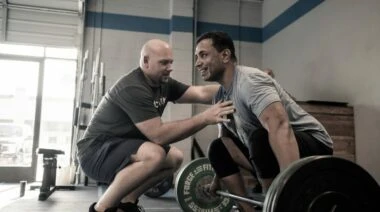
How to Coach an Unmotivated Client
Dealing with Unmotivated Clients in Personal and Group Training
Introduction
When engaged in personal or group training coaching, you've likely encountered clients who are sluggish, fail to grasp exercise cues, or go through their training with a distinct lack of enthusiasm. This is not an occasional occurrence; rather, it seems to be their consistent demeanor, which understandably can be a source of concern.
Personal Training Scenario
In a one - on - one personal training session, it is feasible to inquire if any factors are distracting the client. However, clients are under no compulsion to disclose such information. After all, they are paying for the session and have made the effort to attend, albeit perhaps half - heartedly.
Group Training Scenario
In a group exercise environment, singling out an individual is not advisable and may even be considered unethical. The only viable approach is to motivate and encourage the entire group.
A Shift in Coaching Philosophy
My past coaching experiences, both in personal and group training, could have potentially led to a negative outcome with such clients. I used to believe in relentless pushing. But witnessing how some young athletes were detrimentally affected by this approach, I realized the error of my ways. Not everyone responds well to an overly assertive, in - your - face coaching style. Many individuals associate trainers with boot camps or punishment instructors, and it is crucial not to reinforce this stereotype.
Why Clients Resist Change
Just because a client is physically present does not mean they are fully committed. They may oscillate between the stages of the Transtheoretical Model (TTM).
The Transtheoretical Model (TTM)
The TTM, a concept in health psychology, is utilized to explain or predict an individual's success or failure in achieving a desired behavior change. It consists of six stages:
Precontemplation: The individual does not recognize that there is a problem behavior that requires alteration.
Contemplation: Acknowledgment of the problem exists, but the person is not yet prepared or certain about making a change.
Preparation: The individual is getting ready to initiate the change.
Action/Willpower: The actual change in behavior occurs.
Maintenance: Sustaining the newly adopted behavior change.
Relapse: Reverting to old behaviors and abandoning the new change.
Typically, clients are expected to be in the action or maintenance stage. However, they can regress. A change in the client's mindset can cause them to relapse into old behaviors or revert to the preparation and contemplation stages. This regression is likely the root cause of their sudden loss of motivation and enthusiasm, and traditional forms of encouragement may prove ineffective.
Strategies to Address Unmotivated Clients
Remind Them of Their Goals
Personal Training: Retrieve their consultation form and remind them of their short - and long - term goals. Then, pose the question: Do they still aspire to reach these goals? If the answer is affirmative, this may refocus them on the training task. If not, it could be that their goals have become overly ambitious due to changed circumstances or a shift in their priorities. In such cases, collaborating with the client to adjust the goals to better suit their current situation can enhance their commitment. Once the client feels that the process is centered around them, they are more likely to be engaged. Subsequently, ask if any obstacles are impeding their progress towards these goals. Some clients will respond promptly, while others may need time to think. It is essential to remain silent and listen attentively, as the identified barriers should be their own, not ones suggested by you. Then, jointly develop solutions. Small, manageable steps that the client is comfortable taking will assist them in moving forward and regaining their motivation.
Group Training: During exercise breaks or intervals, remind the group of the health benefits of exercise. Emphasize that progress is not linear, and it is normal to experience ups and downs. Explain the rationale behind the class structure and specific exercises. For instance, illustrate how a hinge movement can protect the back when picking up objects from the floor. This added incentive can encourage unmotivated clients to persevere and understand the real - world benefits of exercise beyond the gym.
Communication Builds Relationships
Group Exercise: Not everyone feels at ease discussing their issues in a gym environment, especially with other fitness - oriented individuals around. Thus, it is vital to establish a communication channel with unmotivated clients. In a group setting, this could involve making yourself available before and after class to address questions and concerns. Alternatively, provide a business card with your email address for them to reach out. While not everyone may take advantage of this, the key is to make the option accessible. The mere knowledge that someone is supportive can be empowering.
Personal Training: In a one - on - one session, sharing both positive and negative personal experiences as a coach and being transparent can make it easier for clients to open up. This approach counters the perception that trainers are infallible in exercise and nutrition. Once the client is more inclined to discuss the factors hindering them, the crucial step is to listen without attempting to immediately fix the problem. Understanding their situation enables you to customize your training program and messaging during the session. Even if they do not disclose anything, the client will know they have a listening ear.
Conclusion
In your coaching career, encountering unmotivated clients is inevitable. Resist the urge to become an overbearing, in - your - face coach, misinterpreting their lack of enthusiasm as an opportunity for more aggressive pushing. Instead, adopt an understanding approach, open lines of communication, and remind them of their training objectives. By doing so, clients are more likely to remain committed to their training journey.