What is Functional Strength Training
Defining Strength: Who Sets the Standards?
Kinesiologists, experts in the study of muscles, employ diverse methods to assess muscle contraction, length, tension, and force. Typically, they measure strength based on these primary factors, often overlooking the subjective nature of individual strength variations. In the grand scheme of functional strength, the ability to lift a specific number of pounds overhead holds little significance.
The Essence of Functional Strength
Functional strength is the force that enables us to navigate through life and meet the demands of daily survival. It is distinct from the strength demonstrated in activities like overhead lifting, which is more relevant for figures like Hercules or competitive weightlifters. The history of manual labor, for instance, has been characterized by activities such as walking, running, pushing, pulling, and grasping. Consider the arduous tasks of pushing and pulling primitive mechanical devices or the construction of the pyramids, as depicted in historical records.
Olympic Weightlifting vs. Functional Strength
What, then, is the issue with the "strength" defined by Olympic weightlifting? There is none. Olympic weightlifting, along with other forms of weightlifting, has significant military and athletic value. It enhances stamina and power output, and the technical skills involved, especially in Olympic lifting, are unparalleled. However, for the purposes of this article, the focus is not on this type of strength but on the daily functional strength and associated movements of ordinary individuals in their natural lives.
Unveiling Functional Strength
Functional strength can be defined as the capacity to move load - bearing joints (shoulders, hips, knees, and ankles) through a full range of motion without experiencing pain, stiffness, or restriction. This is also referred to as load - joint articulation. The goal of functional strength is to ensure that load - joints can open and close within a pain - free, full - range of motion. In today's relatively undemanding environment, where many of us are confined to repetitive motions such as computer work, phone conversations, or driving, and sedentary recreational activities like watching TV or playing video games, it is crucial to find ways to introduce movement.
Creating Movement in a Restrictive Environment
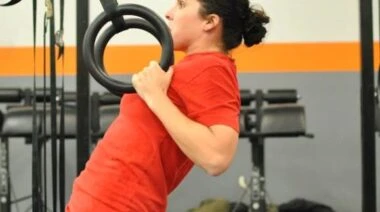
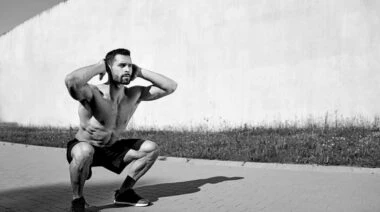
To break free from the "box" of limited movement, one must unleash restrictive movement patterns. Engage in a variety of motions that require joint opening and closing across all planes of motion. This can involve activities both inside and outside the gym, on the track, or along a trail. Revisit childhood activities such as playing on playground equipment like rings and monkey bars. Practice movements like handstands, somersaults, bear crawls, frog jumps, and lateral hops. Utilize an agility ladder for games like hopscotch. By doing so, you stimulate both your mind and your body's response. Minimize sitting and resist being confined by a limited space or terrain.
Is "Stronger" Always Superior?
Consider a revealing test: pit a bulky, muscularly - defined "strong" man against a functionally "weak" woman in a climbing stair test, a specialized, repetitive process involving ascents and descents. Surprisingly, the weaker female is likely to outperform the strong man. This disparity can be attributed to differences in the functionality of their musculoskeletal systems. While there is nothing inherently wrong with the muscular strength of the man, his ability to adapt to spontaneous environments is limited. In contrast, the female in this example exhibits a more diverse and pain - free range of function, being agile and unconstrained by a narrow set of movements.
Degrees of Functional Movement
It is uncommon to witness an athlete transition seamlessly from one sport to another (e.g., Michael Jordan's attempt to move from basketball to baseball). Even changing positions within the same sport can be challenging (such as moving from pitcher to first base). This is due to the repetitive nature of the same limited sequence of motion. To avoid being confined by such limitations, individuals should engage in multiple sports and not restrict themselves to a single role. The degree of function varies among individuals, highlighting the importance of having a personalized fitness, strength, and functionality program. Function is the cornerstone of success in sports, the military, and other essential skills, including speed and agility, all of which rely on an individual's ability to move load - joints through motions.
Personalizing Workout Programs for Functional Strength
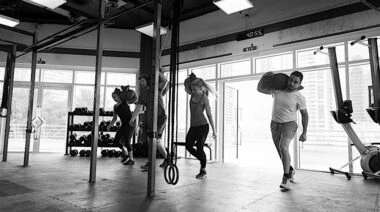
To achieve functional strength, it is essential to find a workout recipe that suits you. This requires identifying the right ingredients. Seek out fitness programmers who can tailor workouts to your specific goals. Incorporate a diverse range of activities into your training, such as running, biking, swimming, resistance training, weightlifting, and kettlebell exercises. Include gymnastic elements like monkey bar activities and practice hot yoga for stretching. If you have no prior experience with these activities, take the time to learn and enjoy them. Remember, form should always be a top priority; do not rush through any of these elements. Strength is often more defined by load - bearing functionality than by the amount of weight lifted.
In conclusion, the best advice is to have fun, avoid being confined by limitations, maintain a good diet, train effectively, and enjoy a bit of recreational activity.